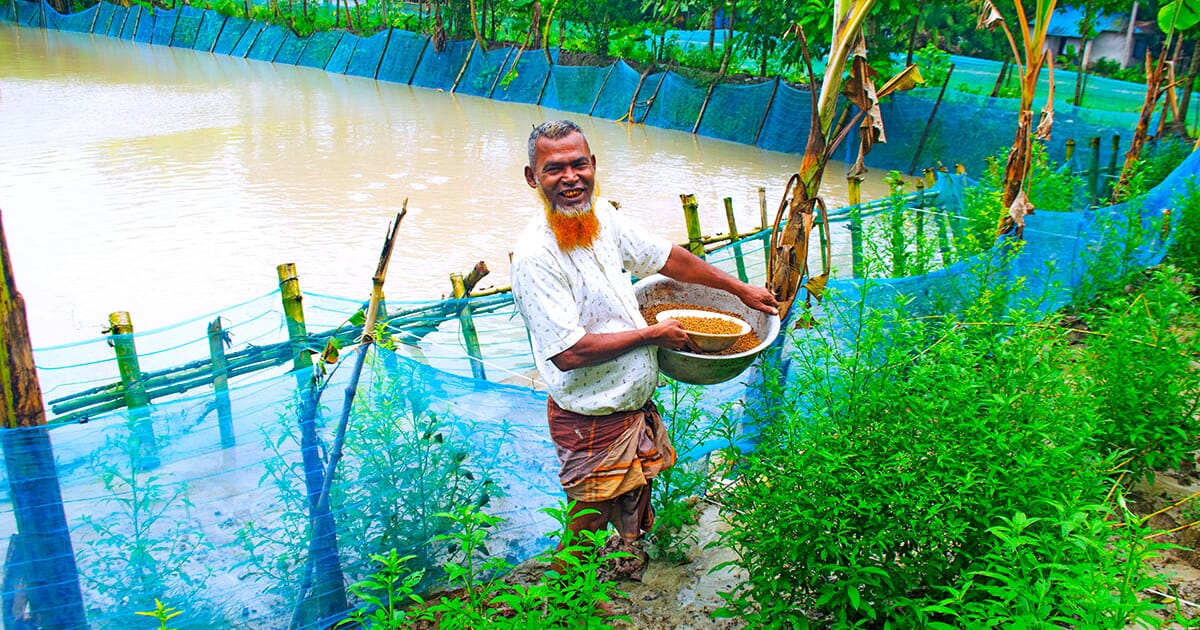
Alam Panchayat swapped a career as an urban chef with a chance to set up his own carp farm in Barguna, on the coast of Bangladesh, slowly growing a successful business, despite the challenges posed…
A €7 million public-private partnership has opened a Centre of Excellence in Cox’s Bazar to train 1,800 fish and shrimp farmers to strengthens sustainable growth of Bangladesh’s aquaculture sector.
In Bangladesh, public opinion holds strong that frozen seafood is inferior to its fresh counterparts, however, as Zubair Khan explains, this is often not the case.
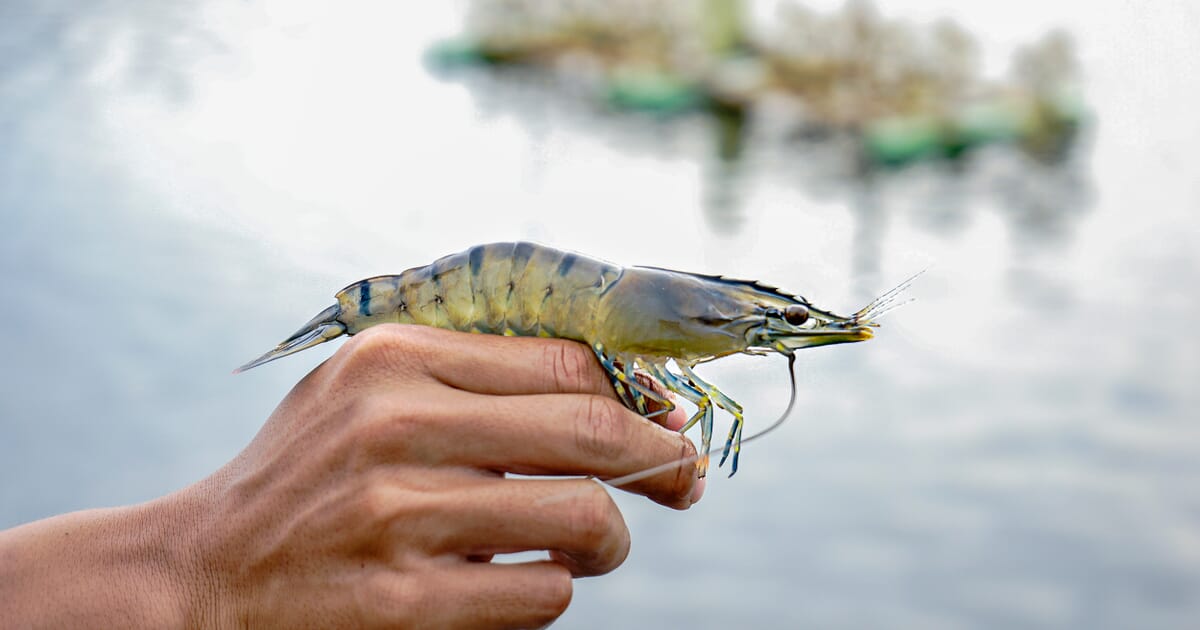
Despite facing a number of key challenges, Bangladesh’s monodon sector has an opportunity to position itself as a low carbon alternative to the more intensively produced vannamei that dominate global…
A switch to farming giant river prawns is proving economically astute for a growing number of Bangladesh’s aquaculture operators, but the sector still has challenges to overcome.
Bangladesh's aquaculture sector has lost $140 million in a decade due to climate change, reveals new analysis, highlighting the need for better climate data services.
Mississippi State University has received a five-year funding package of up to $15 million, to address global food security challenges through aquatic food systems.
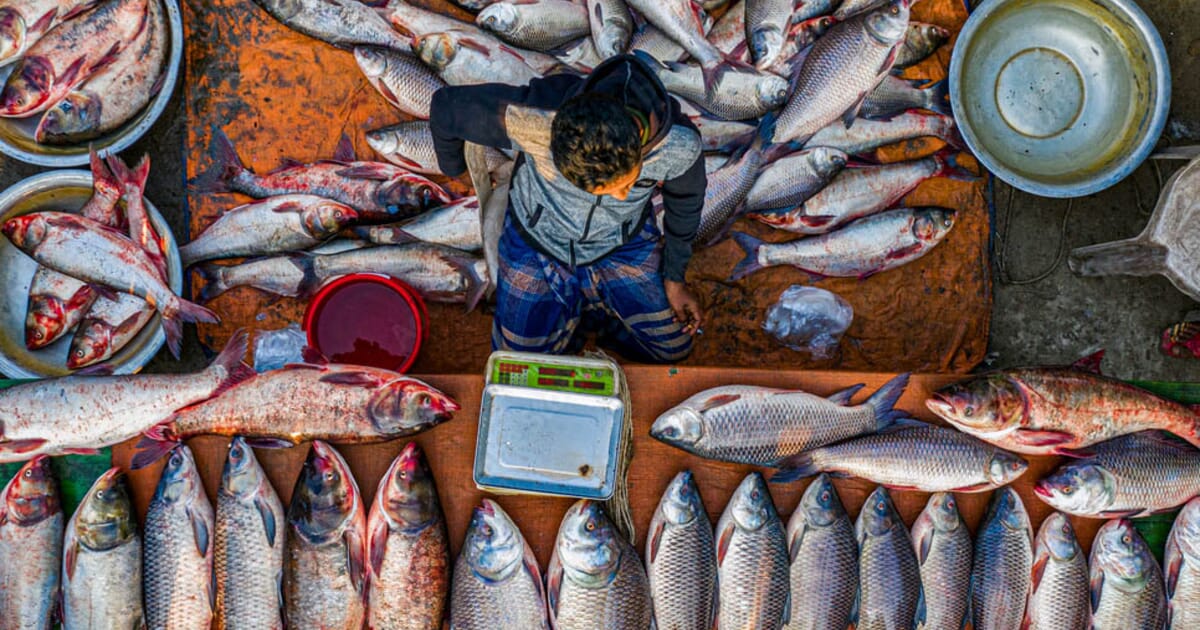
Bangladesh has experienced a significant surge in fish production over the last 12 years, primarily driven by the farming of pangasius, tilapia and Gangetic koi (Anabas cobojius).
Frozen shrimp are the staple export item from the Khulna, Satkhira and Bagerhat regions of southern Bangladesh, accounting for about 90 percent of the country’s total shrimp exports.
Attempts to improve access to disease-free shrimp juveniles – and clamp down on illegal imports – in Bangladesh show promise, but the sector still has a long way to go.*
The scorching heat and low rainfall in Bangladesh in the beginning of summer have had devastating effects on the shrimp industry, particularly in Satkhira district, in the Khulna division.*
A researcher with the University of Stirling’s Institute of Aquaculture has played an instrumental role in developing a new tool that can help identify girls in developing countries who are at risk…
A grant of nearly $800,000 from the NASA Land Cover/Land Use Change (LCLUC) program, will allow researchers from Michigan State University (MSU) to assess the extent of aquaculture operations in…
The Bay of Bengal Programme (BOBP), an intergovernmental fisheries advisory body, is using art to raise public awareness of the instrumental role women play in fish cultivation in South Asia in a…
Recent genetic advances are being heralded as possible game-changers for the tiger prawn (Penaeus monodon) farming sector, potentially bringing a welcome renaissance to a sector that has fallen far…
The WWF-inspired free-to-access traceability tool - called transparenC - has huge potential to improve the accountability of the entire shrimp supply chain.
Dipika Roy Prapti, a postgraduate researcher at Universiti Putra Malaysia, is developing technology to elevate the prospects of farmers – and females – in the aquaculture sector, in Bangladesh and…
Stirling’s Women in STEM fellowships are open to applicants from South Asia and will focus on aquaculture diseases, sustainable ways to intensify production, aquatic ecosystem health and…
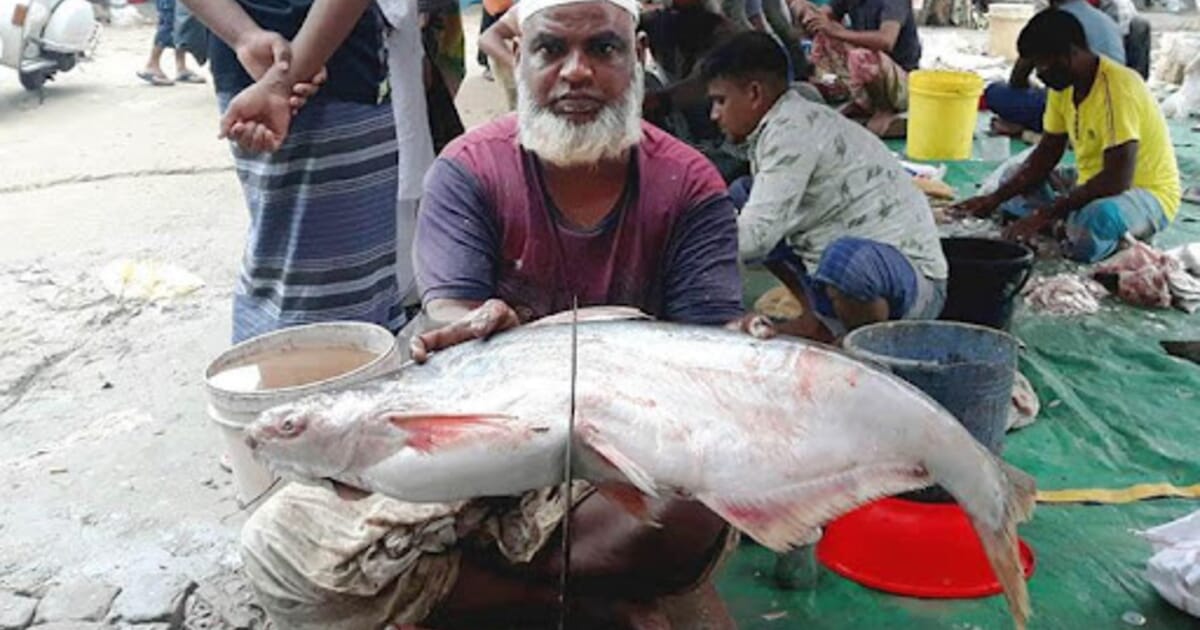
A recent audit of Bangladesh’s pangasius farms found that only 35 percent of farmers were able to meet sustainability and quality indicators at the “best” or “good” level – how can this be improved?
A recent feed trial has found that supplementing Nile tilapia diets with bakers’ yeast (Saccharomyces cerevisiae) can change the fishes’ intestinal morphology, leading to improved nutrient uptake,…
The sludge and sediment that accumulates during the shrimp farming cycle can cause a lot of problems if left unmanaged - here's how producers can handle it effectively.
Effluent from shrimp ponds can have a significant impact on the natural environment and on neighbouring shrimp farms, but there are a number of ways to reduce this impact, for the good of both the…
Bangladesh’s finfish aquaculture industry must make key financial and technological investments following the Covid-19 pandemic in order to re-establish its growth trajectory.
By identifying and eliminating production risks, Bangladesh’s pond aquaculture industry can become more efficient and remain on its current growth trajectory.
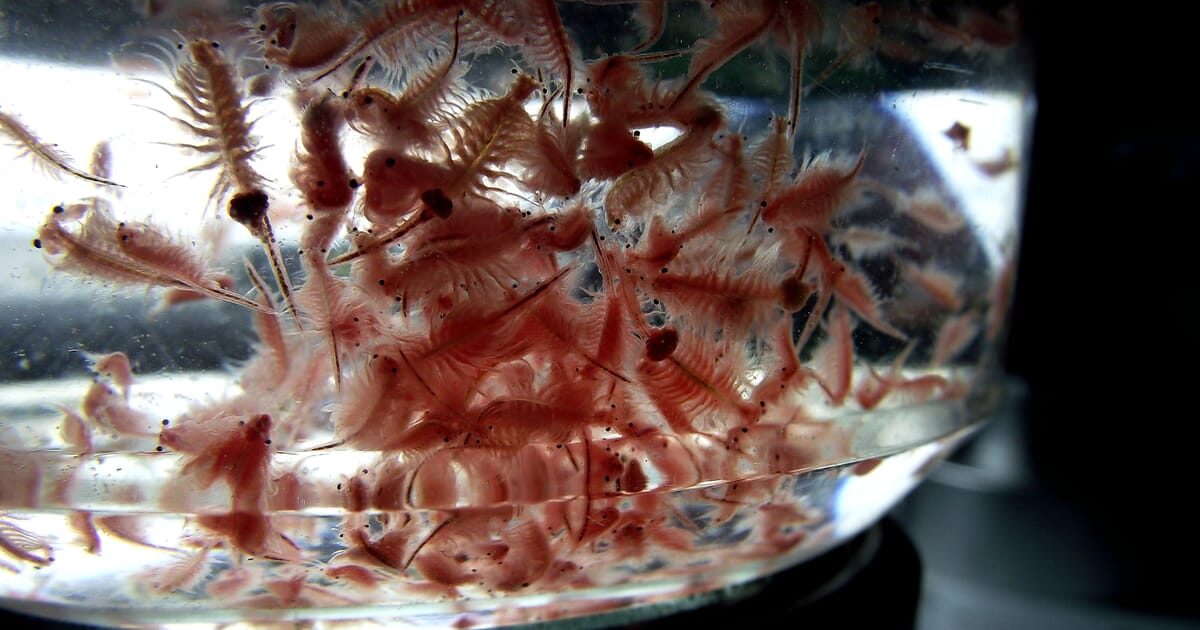
Artemia are valuable as live feeds for the early life stages of shrimp. While they might be expensive, if used correctly – as explained below – they should fully justify the investment
The increasingly sophisticated administration of probiotics is having a major impact on the sustainability of shrimp aquaculture, and there are further advances expected, through the use of…
We use cookies to improve your experience, analyse site traffic and understand where our audience comes from. Accept all cookies, or continue with only those essential to running the site. See our Privacy & cookie policy.