A landmark agreement has been signed to establish Africa’s first Insectum processing facility in Accra, marking a significant step forward for Ghana’s circular economy.
In a move to strengthen Ghana’s seafood farming industry, Aquaculture Stewardship Council (ASC) and the Chamber of Aquaculture Ghana (COA) have signed a memorandum of understanding (MoU) aimed at…
Francisco Murillo is perplexed by the hundreds of millions of dollars wasted on failing RAS projects, when a fraction of the funding could help proven businesses like Tropo Farms produce tens of…
A new initiative that will provide training, equipment and startup capital for 10,000 prospective fish farmers across Ghana has been launched by the country’s President, Nana Addo Dankwa Akuffo-Addo.
Aiming to discuss the potential of sustainable aquaculture development across the region, ASC members joined scientists and policymakers from Ghana, Nigeria, Sierra Leone, Senegal, and the UK at a…
Representatives from the University of Arkansas at Pine Bluff (UAPB) and Delaware State University (DSU) recently travelled to Ghana to promote opportunities in aquaculture and fisheries.
Ghana’s tilapia farmers have been promised a share of the $40 million pledged by the government to alleviate the issues caused by the recent flooding in Lake Volta, but some experts argue that a…
Ghana’s tilapia farming epicentre is under threat, as the opening of spillways by the Volta River Authority (VRA) to prevent flooding has led to widespread damage to cages on Lake Volta.
Straight after her graduation with a degree in land economy in 2019, Precious Nutifafa decided to build a catfish farm in Saviefe Agorkpo, in the Volta Region of Ghana, and she now has plans to build…
Kwame David Adade took over Windmill Farms – a catfish and tilapia farm in Ghana – from his father four years ago and since then has made some interesting discoveries, especially in feed formulation.
A new programme, which is taking place at Tropo Farms in Ghana, aims to leverage data analytics and machine-learning to correlate and anticipate tilapia health and growth with environmental data.
Scientists on a project led by the University of Southampton have developed an early warning system so communities can prepare for the arrival of sargassum seaweed blooms and then convert the organic…
Lake Volta might be the most productive aquaculture centre in Ghana, but the current model of fish farming on the lake is unsustainable, according to Dr Kofitsyo Cudjoe, a senior adviser at the…
A three-year project in Ghana that was designed to improve pond farmers’ access to quality Nile tilapia juveniles could help Ghana’s pond farmers catch up with the productivity of the cage farmers on…
On August 19, executive members of the Ghana Aquaculture Society, led by the president, Jennifer Sodji-Tagbor, visited Flosell Farms at Sogakope to mark the beginning of an internship programme for…
Efua Konyim Okai, correspondent for The Fish Site, reflects on a recent visit to the first-ever AFRAQ event, which took place in Egypt at the end of March.
Sailesh Chudasama believes that biofloc production – of species including shrimp, tilapia and catfish – can create well-paid jobs and improve food security, both in Ghana and beyond.
The Norwegian Agency for Development Cooperation (NORAD) has begun its three-year black soldier fly (BSF) project to improve urban sanitation and address biowaste in Ghana, Mali and Niger.
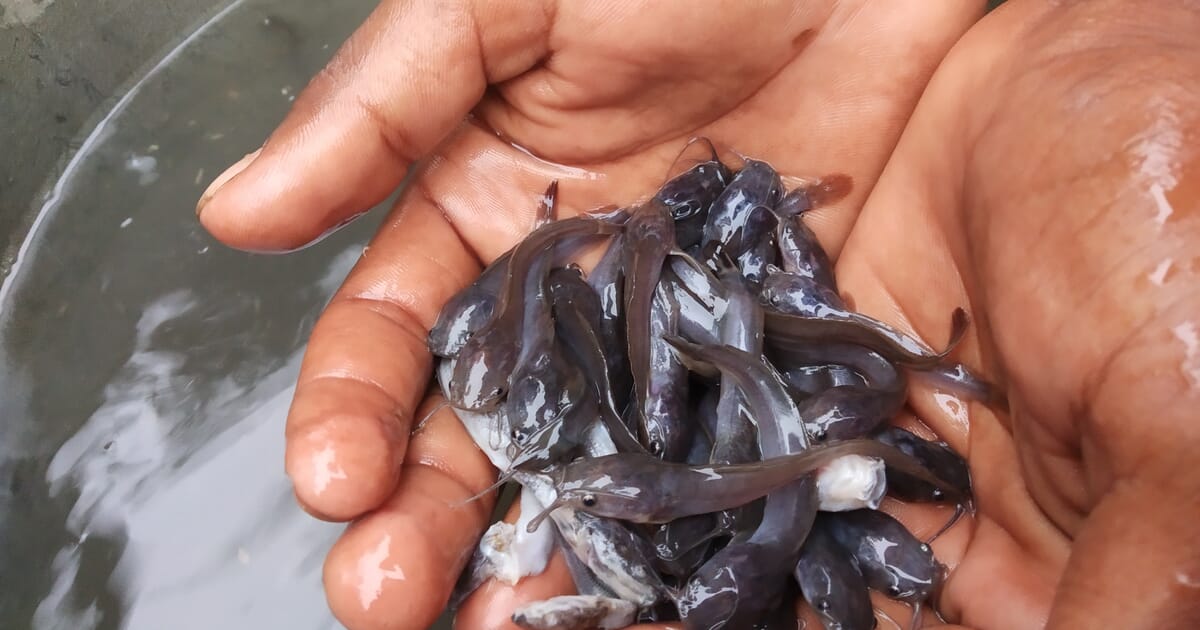
26-year-old Wilfred Agbi runs Weija Farms, a catfish hatchery and an “aquaculture evangelism” agency in Ghana that aims to train up young people who are looking to establish their own fish farms.
Catfish, like tilapia, have the potential to drive the growth of sub-Saharan Africa’s aquaculture industry, while an emerging breed of producers might offer investment opportunities too.
After graduating with a degree in natural resource management, Emmanuel Dery started the first fish farm in Ghana’s Northern and Upper Regions, with the support of the Canada International…
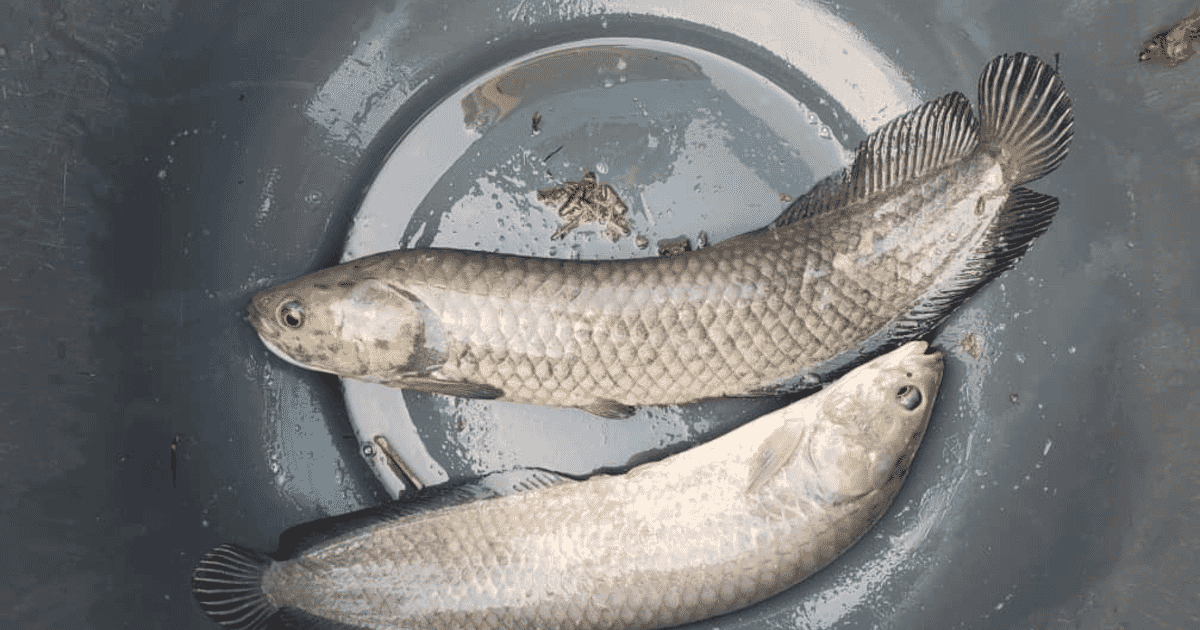
Researchers in Ghana believe that there’s now scope to fulfil the potential of the African bony tongue – commonly referred to as “super cu” in Ghana – as a key aquaculture species.
Aquaculture is a vital source of affordable seafood, that – if backed up by education – can help to halt a deepening public health crisis in the US, according to Eric Adjepong, who is well-known for…
The 32-year-old is the head of Dunamis Golden Farms, located at the Akuse end of the Volta Lake, in eastern Ghana, as well as a distributor of fish feed, and a provider of technical services to young…
Wastewater-fed aquaculture has been suggested as a low-tech and sustainable way to provide animal protein while investing in water treatment infrastructure – but can this business model be applied in…
A fish farming system which produces tilapia, algae and plants that can be used as both fish feeds and agricultural fertilisers has been established by two West African entrepreneurs.
Up to 10 percent of the cichlid fish in Ghana’s Lake Bosomtwe can be traced to escapees from a short-lived illegal Nile tilapia farm, according to new research.
New trials in Ghana suggest that the GIFT strain of tilapia grows twice as fast as the native Akosombo strain, which are currently favoured by farmers.
We use cookies to improve your experience, analyse site traffic and understand where our audience comes from. Accept all cookies, or continue with only those essential to running the site. See our Privacy & cookie policy.