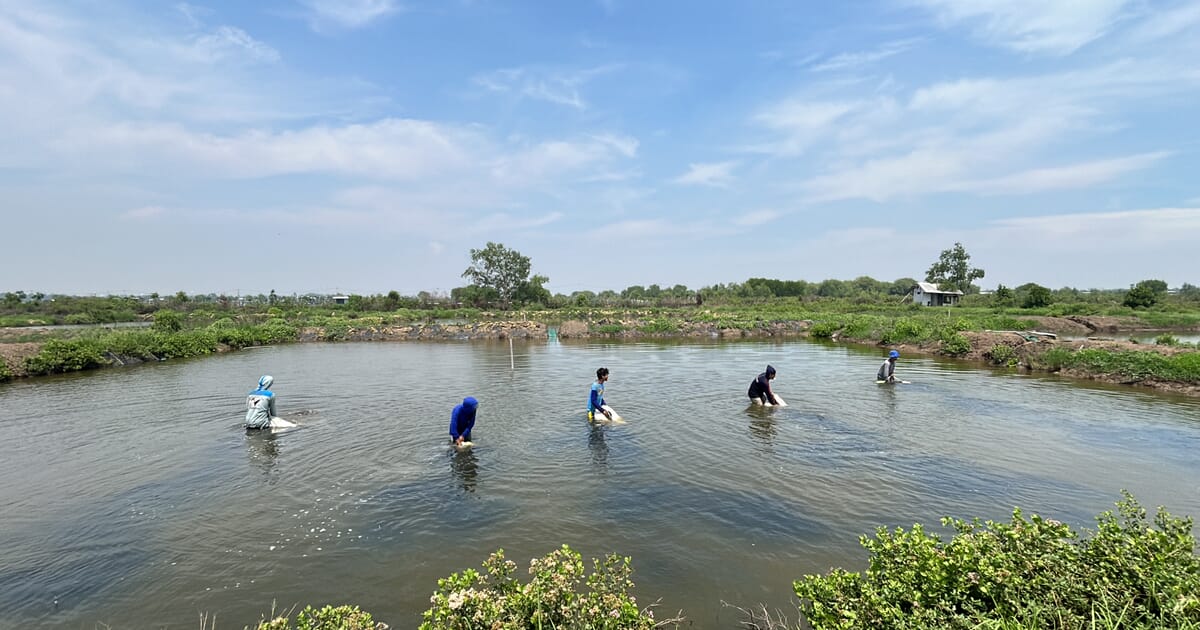
Sustainable Shrimp Farming in India is helping smallholders in Andhra Pradesh improve shrimp welfare – and their own livelihoods – through a variety of simple, yet effective, interventions.
Carlos Duarte argues aquaculture can deliver net benefits by shifting to low-trophic, circular farming – if policy, research and markets keep pace in 2026 and beyond.
New research from Nofima shows that nutrients in discharge water from land-based salmon farms could be used to grow high-value dulse at scale, potentially creating new food production and business…
A new aquaculture project has demonstrated that farming Nile tilapia and giant freshwater prawn together can significantly increase yield and income for local farmers in the Philippines.
“In a thousand years, when history books will discuss what was relevant that happened in the 20th century, I believe it will not be AI. It will be the time in which we learn how to produce food from…
The Indian government has launched a new pilot fish farming project aimed at boosting livelihood opportunities for fish farmers in the Kuttanad region.
Thomas Miard, founder of Les 4 Marais, believes that working with nature, not against it, is the key to unlocking aquaculture systems that are both productive and regenerative. From coral restoration…
The impending closure of a mine is threatening the future of Groote Eylandt, in Australia’s Northern Territory, but a new initiative, based on old traditions, aims to develop a sustainable blue…
The Asia-Africa BlueTech Superhighway (AABS), a WorldFish-led initiative funded by the UK Blue Planet Fund, is making strides toward building climate-resilient aquatic food systems in Nigeria.
Shrimp farming in Vietnam is challenged by both low profitability and environmental degradation. CK, founder of Rongbient, wants to improve both sides of this equation with the help of a new model…
As US lawmakers consider legislation that would develop open ocean aquaculture, a new report from the Environmental Defense Fund (EDF) provides critical insights into species that may be optimal for…
Pond farming of Gracilaria seaweeds has seen steady growth in Indonesia over the past 30 years. While demand continues to grow, both seaweed farmers and upstream processors are aware that methods…
In the face of rising mortality rates caused by warming sea temperatures, Saumon de France - Europe's most southernly net pen salmon producer - has had to significantly modify its production cycle,…
Ultfarms – a new research project at Anholt Offshore Wind Farm in Denmark – plans to grow a number of less carbon-intensive foods on wind farm sites in the hope this will contribute to a healthier…
Leanne Morris Bennet is an aquaculture extension officer with the National Fisheries Authority in Jamaica, currently pursuing a master of science in aquatic biology in Iceland, where her research…
As the blue food sector expands its contribution to global food security, the FAO interviewed Matthias Halwart, head of the global and regional processes team for aquaculture at the FAO, to outline…
Ananda Arrieta is helping to pioneer the use of bioremediation in Australia's aquaculture sector and sees her work as an essential part of the evolution of land-based aquaculture systems.
Although the $4 billion giant river prawn (Macrobrachium ronsebergii) sector has largely stagnated over the last decade, new breeding programmes could help pave the way for its resurgence.
Seaweed aquaculture and kelp forest restoration are getting a tentative nod as a blue carbon strategy – but the way policymakers structure carbon credits and offsets may make its benefits theoretical…
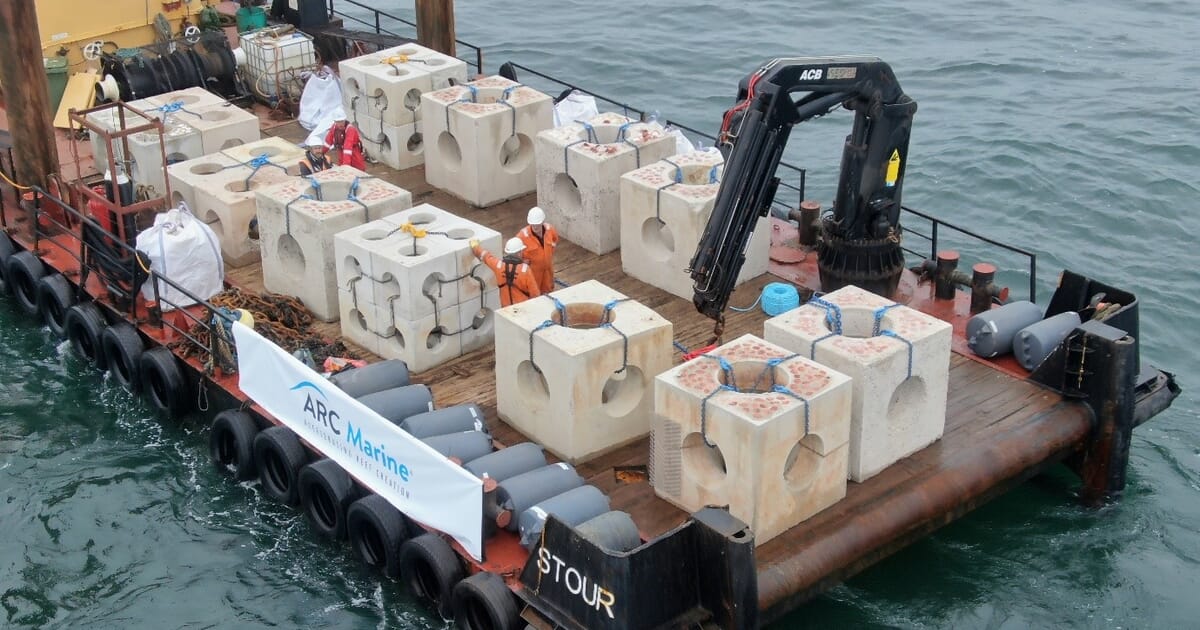
Artificial reefs made from innovative, low-carbon emission materials have the potential to improve biodiversity around aquaculture sites and may even open up opportunities for multi-trophic…
Collectively managed ”sea allotments”, which produce mussels for consumption by local communities, are a growing trend in Denmark, as more people bid to produce environmentally sustainable – and…
A commercial-scale, modular, stacked aquaculture system that’s capable of producing between 50 tonnes of shrimp a year with minimum human intervention is set to be operational in Singapore in 2023.
A new project that aims to investigate growing kelp and mussels alongside offshore wind turbines – as well as researching the potential for artificial reefs – has been awarded a NOK 84 million (£7…
We use cookies to improve your experience, analyse site traffic and understand where our audience comes from. Accept all cookies, or continue with only those essential to running the site. See our Privacy & cookie policy.