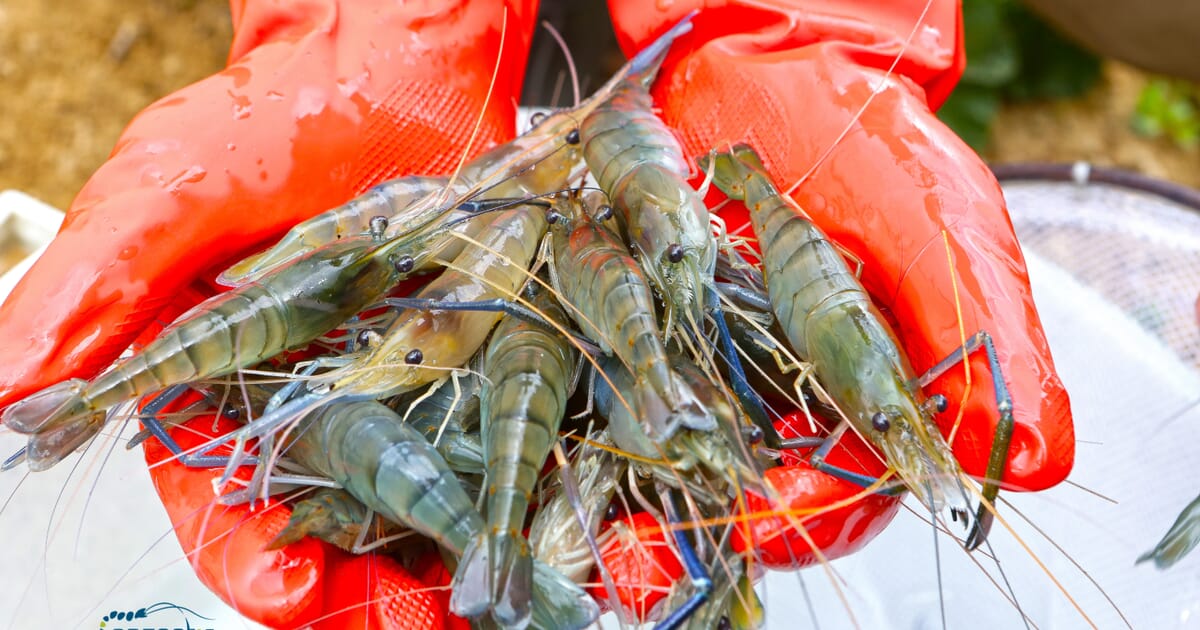
Shrimp producers are going to have to embrace new technologies and production techniques if they are going survive, according to Rabobank’s senior seafood analyst Gorjan Nikolik.
The need to better understand the future of aquatic foods – including the opportunities related to the likely rise of lab-grown fish – is the focus of a new agreement between WorldFish and the…
Wider application of genetic improvement in aquaculture, with a focus on selective breeding, will help boost seafood production without the need to hugely increase the volume of inputs – including…
The Aquaculture Innovation Showcase is coming in September. Ahead of the event in London, The Fish Site spoke to TransAlgae’s VP of research and development, Ofra Chen, to discuss how algae can…
Details of a new $3.8 million project that will use genomic techniques to produce the first selectively bred Canadian strain of eastern oyster (Crassostrea virginica) have been released today.
Mike Selden, CEO of Finless Foods, explains how cell-based seafood can complement conventional aquaculture in helping to feed the planet without destroying ocean life.
In this two-part feature, The Fish Site and Mike Selden, CEO of the cell-based fish company Finless Foods, discuss the background of lab-grown fish and the origins of Finless Foods bluefin tuna.
Salmon rendered sterile through gene editing are exhibiting encouraging behaviour and performance during the grow-out phase, according to new research results.
Ways to commercialise the production of finfish rendered sterile by novel methods sparked a thought-provoking discussion at the end of the inaugural International Finfish Sterility Workshop, which…
In the second part of the feature, Professor Ross Houston, who is currently involved in using gene editing to improve resistance to diseases in salmon, explains the barriers – technical, regulatory…
In a two-part feature, Professor Ross Houston, one of the world’s foremost aquaculture genetics experts, explains how a combination of new techniques and new technologies has a huge potential to…
A line of tilapia that has been gene edited will not be classified as a genetically modified organisms (GMOs) in Argentina, according to a government advisory commission.
Despite being overfished in China and South East Asia, a suite of advances in sustainable aquaculture of a number of grouper species is bringing benefits to producers and consumers alike.
Dr Laura Braden, an eminent sea lice researcher who now works for AquaBounty, lives on Prince Edward Island, Canada, with her husband-to-be, a young baby, two German shepherds and a Norwegian forest…
A project which aims to selectively breed feed-efficient lines of tilapia in order to improve the economic viability of aquaculture in areas where feed is expensive and scarce has recently been…
The benefits that salmon farmers obtain by sourcing their stocks from cutting-edge breeding programmes are chronically undervalued, according to a new study.
HATCH, the world´s first global aquaculture accelerator, is moving to Cork, Ireland, for its second cohort after a successful first one in Bergen earlier in 2018.
Benchmark, the fish health and aquaculture genetics specialists, are currently looking to appoint a new commercial director for their genetics division.
We use cookies to improve your experience, analyse site traffic and understand where our audience comes from. Accept all cookies, or continue with only those essential to running the site. See our Privacy & cookie policy.