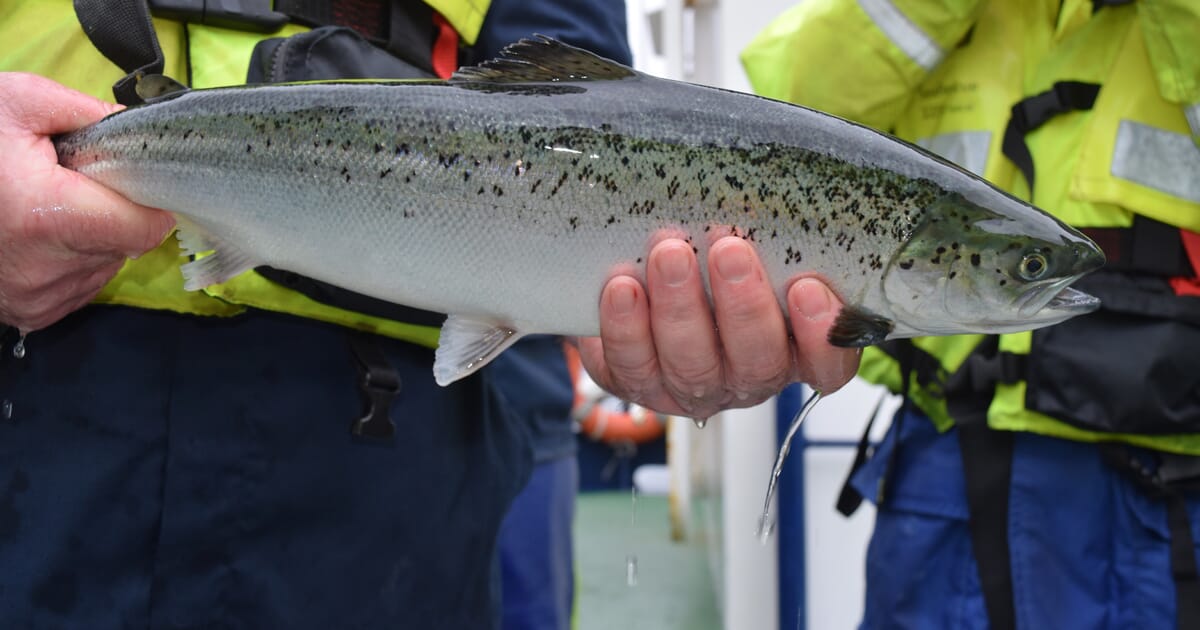
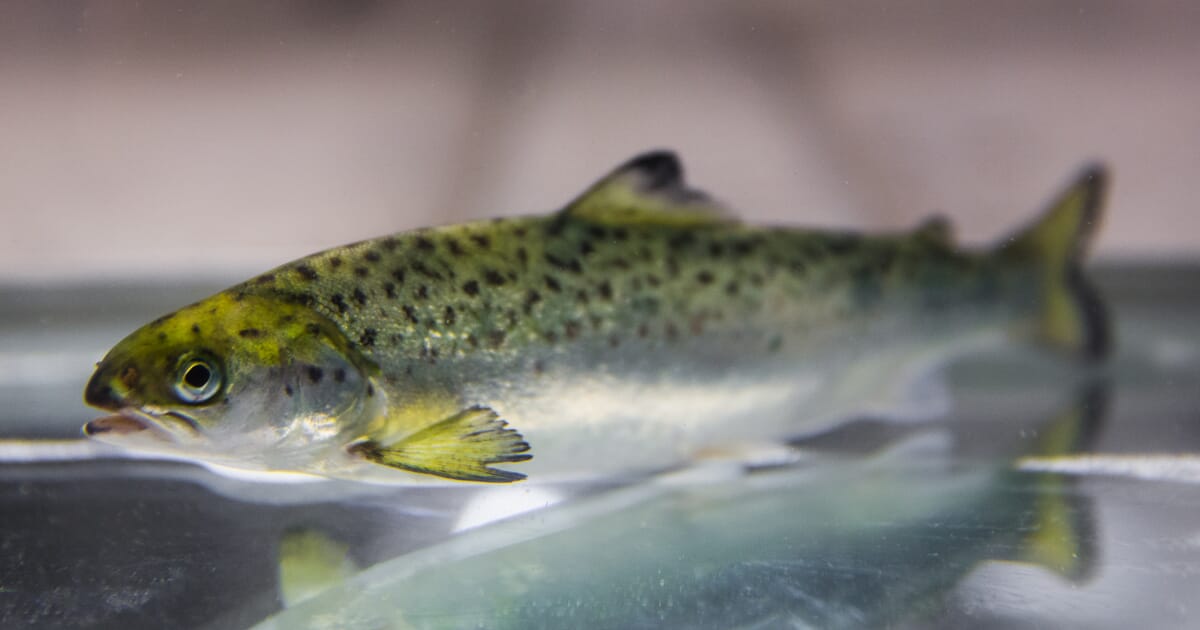
Manual counting of sea lice – an activity that is stressful for fish, time-consuming for farmers and statistically questionable – is no longer mandatory on all salmon farms in Norway, following a…
Research into sea lice management measures used on Scottish salmon farms has found the use of in-feed treatments and lice skirts are the most cost-effective.
The Scottish Government-funded research…
New methods for performing freshwater treatments against sea lice and amoebic gill disease (AGD) in salmon farms have been successfully developed and trialled in Ireland.
The efficacy of a laser-firing device that has been designed to reduce sea lice pressures on farmed salmon has been called into question by new research.
A new, cost-effective selective breeding method for improving how resistant salmon are to sea lice is being developed by a Scottish research consortium.
The levels of anti-sea lice medication residues in Norwegian farmed salmon and trout may be below the EU’s maximum residue limit (MRL), but a longer withdrawal period for emamectin should be…
Benchmark Holdings, the aquaculture health, nutrition and genetics business, has raised £43 million, as it seeks to scale up its CleanTreat sea lice treatment system.
The strain of sea louse most closely linked to the spread of disease and mortalities in both farmed and wild Atlantic salmon is unlikely to be adversely affected by the increasing acidification of…
A pioneering system that can automatically count sea lice – and potentially save thousands of man hours, as well as improve fish welfare – is in the running for this year’s Nor Fishing Innovation…
New research has revealed that lumpfish exposed to live prey and frozen sea lice prior to transfer to marine sites perform better as cleaner fish once stocked in salmon pens.
We use cookies to improve your experience, analyse site traffic and understand where our audience comes from. Accept all cookies, or continue with only those essential to running the site. See our Privacy & cookie policy.